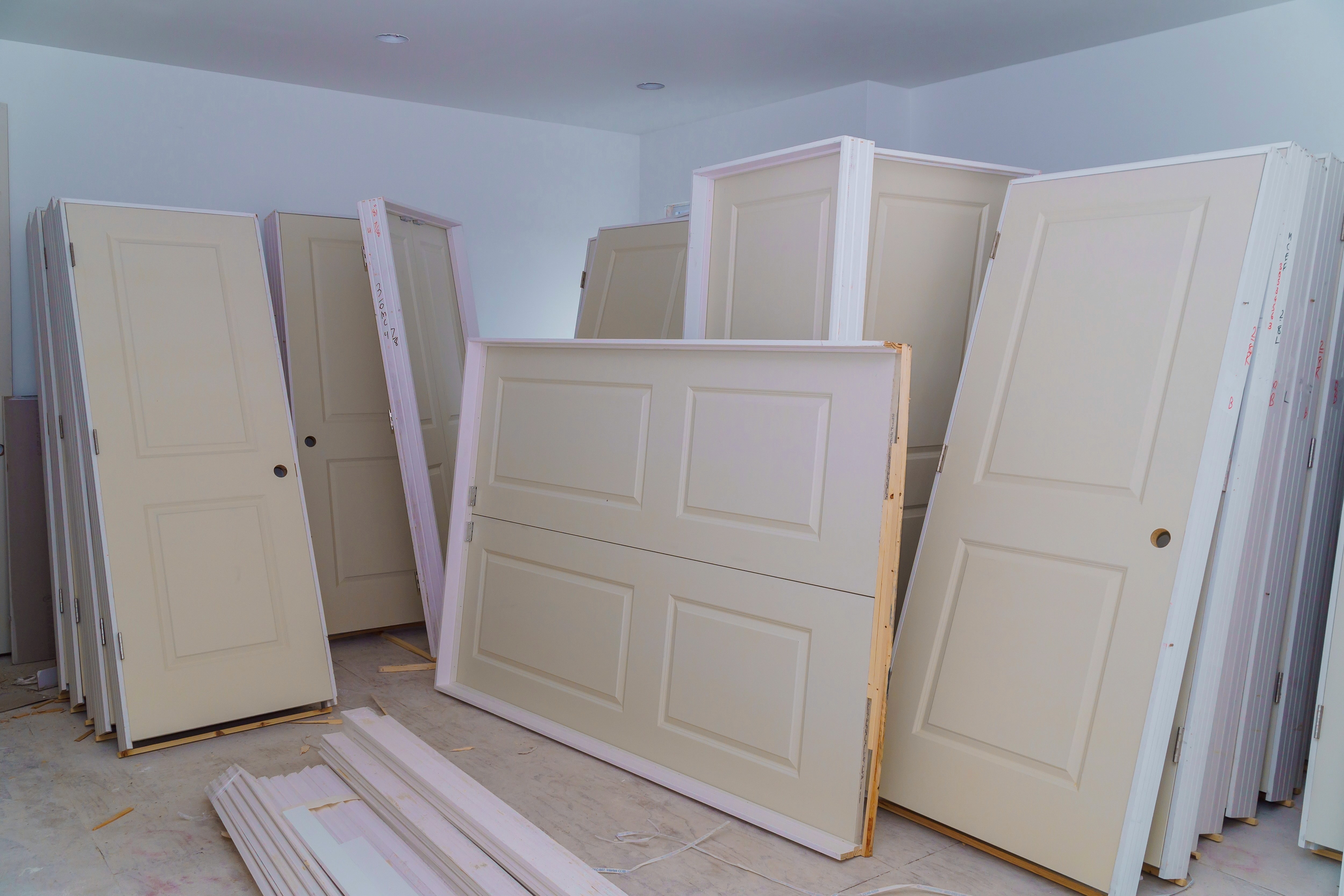
Doors internal, external, fire-rated
Why doors are a circular-economy “sweet spot”
Doors are standardised assets with clear specs (size, rating, leaf/frame, ironmongery) and repeat demand (repairs, refurbs, new installs).
The commercial barrier isn’t “is there value?” – it’s verification, traceability, and timing.
What typically happens:
On fit-outs / soft strip, doors get removed under programme pressure; without storage + grading, they go to chipboard/downcycling or incineration (especially if mixed sets, missing certs, or unknown ratings).
Reuse pathways:
Direct reuse (same spec)
Refurbish + re-cert route (where feasible)
Harvest ironmongery / frames / glazing (component reuse)
Material recycling (lowest value)
How EME handles doors:
Grading + verification: capture dimensions, type (FD rating where known), condition, photos, counts, packaging
Digital Product Passport: spec sheet, chain-of-custody, listing record
Matchmaking: local reuse buyers + projects; split lots where needed
Brokerage + logistics: storage to “buy time”, multi-drop delivery, export where appropriate + documented
Proof: Neilcott Construction Ltd
Example case study: 17 surplus doors
Problem: 17 surplus doors, tight deadline; risk of recycling/incineration
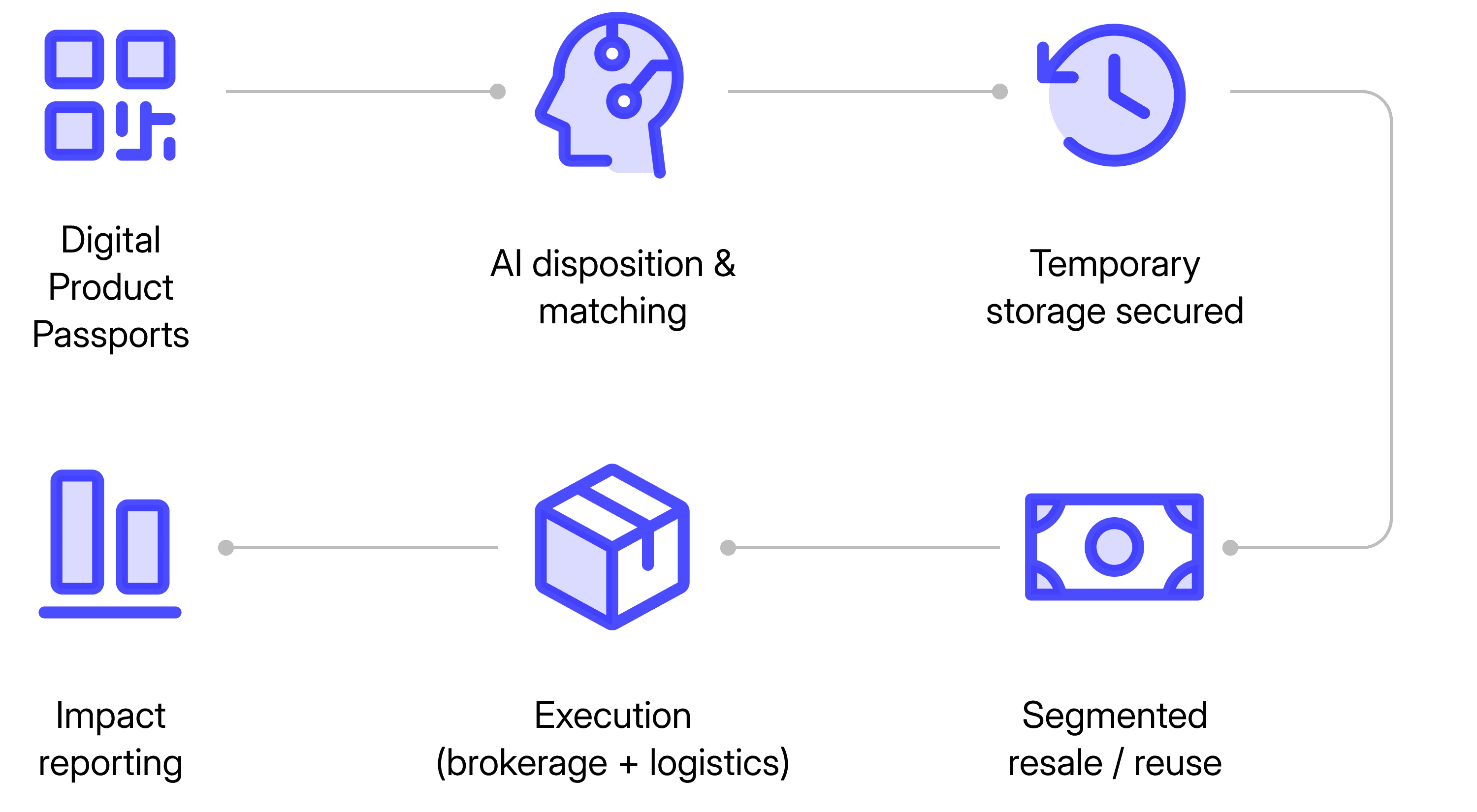
EME solution (4 steps): temporary storage → platform listing + DPP → AI matchmaking → brokerage & logistics
Result: £2,360 savings; 1,300kg diverted; ~250kgCO₂e saved + ~1,010kgCO₂e end-of-life emissions avoided
The bigger UK-scale story:
UK demand for doors is large: one residential market estimate equates to ~10.6M units in 2024 (residential doors sold).
The UK also imports significant wooden doors: HS 441820 imports ~US$393.8M (2023).
Scaling reuse requires: grading, traceability, and compliance evidence—exactly what DPP + brokerage operationalises.
Tell the agent: type, sizes, fire rating (if known), quantity, location, and deadline for your doors…
We’ll do the rest.
Material Use Cases
List once — EME’s AI agent verifies specs, issues Digital Product Passports, matches demand, and brokers the deal.
Material Use Cases
List once — EME’s AI agent verifies specs, issues Digital Product Passports, matches demand, and brokers the deal.
Material Use Cases
List once — EME’s AI agent verifies specs, issues Digital Product Passports, matches demand, and brokers the deal.
Doors internal, external
Case study: Neilcott Construction Ltd

Project context: 17 Surplus Doors
As part of a live construction close-out, Neilcott Construction Ltd had 17 surplus doors (including fire doors and glazed doors all of mixed sizes) that were released under time pressure, with no clear reuse pathway.
Why doors are a circular-economy “sweet spot”
Doors are standardised assets with clear specs (size, rating, leaf/frame, ironmongery) and repeat demand (repairs, refurbs, new installs).
The commercial barrier isn’t “is there value?” – it’s verification, traceability, and timing.
Conventional industry route:
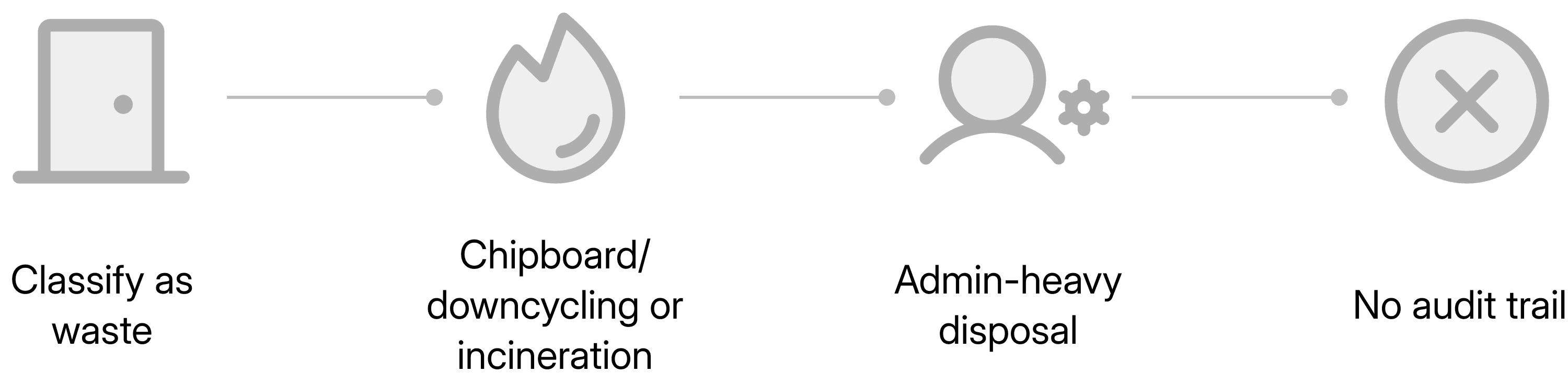
Classify as waste → Chipboard/downcycling or Incineration → Admin-heavy disposal → No audit trail.
Why doors are a circular-economy “sweet spot”
Doors are standardised assets with clear specs (size, rating, leaf/frame, ironmongery) and repeat demand (repairs, refurbs, new installs).
The commercial barrier isn’t “is there value?” – it’s verification, traceability, and timing.
Material context (why this matters beyond one site):
UK door demand is large (one market estimate indicates ~10.6M residential doors sold in 2024).
The UK also imports significant wooden doors (HS 441820 imports ~US$393.8M in 2023).
Why doors are a circular-economy “sweet spot”
Doors are standardised assets with clear specs (size, rating, leaf/frame, ironmongery) and repeat demand (repairs, refurbs, new installs).
The commercial barrier isn’t “is there value?” – it’s verification, traceability, and timing.
Status Quo
Why doors are a circular-economy “sweet spot”
Doors are standardised assets with clear specs (size, rating, leaf/frame, ironmongery) and repeat demand (repairs, refurbs, new installs).
The commercial barrier isn’t “is there value?” – it’s verification, traceability, and timing.
Conventional disposal:
Why doors are a circular-economy “sweet spot”
Doors are standardised assets with clear specs (size, rating, leaf/frame, ironmongery) and repeat demand (repairs, refurbs, new installs).
The commercial barrier isn’t “is there value?” – it’s verification, traceability, and timing.
Financial outcome (typical reality):
Disposal admin + transport + gate fees
Value lost: no resale liquidity, no reuse matching
(Project-specific figures vary; this is the default pattern.)
Why doors are a circular-economy “sweet spot”
Doors are standardised assets with clear specs (size, rating, leaf/frame, ironmongery) and repeat demand (repairs, refurbs, new installs).
The commercial barrier isn’t “is there value?” – it’s verification, traceability, and timing.
Carbon outcome:
Avoided-new-manufacture benefit = missed
End-of-life emissions = incurred
Why doors are a circular-economy “sweet spot”
Doors are standardised assets with clear specs (size, rating, leaf/frame, ironmongery) and repeat demand (repairs, refurbs, new installs).
The commercial barrier isn’t “is there value?” – it’s verification, traceability, and timing.
System characteristics:
Asset loses economic identity
No structured market access
No compliance-grade traceability
“Fast disposal” wins over “best outcome”
Why doors are a circular-economy “sweet spot”
Doors are standardised assets with clear specs (size, rating, leaf/frame, ironmongery) and repeat demand (repairs, refurbs, new installs).
The commercial barrier isn’t “is there value?” – it’s verification, traceability, and timing.
With EME
Why doors are a circular-economy “sweet spot”
Doors are standardised assets with clear specs (size, rating, leaf/frame, ironmongery) and repeat demand (repairs, refurbs, new installs).
The commercial barrier isn’t “is there value?” – it’s verification, traceability, and timing.
Structured disposition via EME:
Why doors are a circular-economy “sweet spot”
Doors are standardised assets with clear specs (size, rating, leaf/frame, ironmongery) and repeat demand (repairs, refurbs, new installs).
The commercial barrier isn’t “is there value?” – it’s verification, traceability, and timing.
Financial outcome (Neilcott case):
£2,360 saved for Neilcott (avoided disposal fees + reduced ops time + resale revenue)
£10,500+ avoided new-material spend for buyers (value captured downstream via reuse)
Why doors are a circular-economy “sweet spot”
Doors are standardised assets with clear specs (size, rating, leaf/frame, ironmongery) and repeat demand (repairs, refurbs, new installs).
The commercial barrier isn’t “is there value?” – it’s verification, traceability, and timing.
Carbon outcome (Neilcott case):
~250 kgCO₂e saved (avoid new manufacture)
~1,010 kgCO₂e end-of-life emissions avoided
1,300 kg kept in circulation
Why doors are a circular-economy “sweet spot”
Doors are standardised assets with clear specs (size, rating, leaf/frame, ironmongery) and repeat demand (repairs, refurbs, new installs).
The commercial barrier isn’t “is there value?” – it’s verification, traceability, and timing.
System characteristics:
Asset remains economically legible
Liquidity activated (real buyers, not scrap)
Execution de-risked (storage + logistics + brokerage)
CFO-grade reporting + traceability via DPP
Why doors are a circular-economy “sweet spot”
Doors are standardised assets with clear specs (size, rating, leaf/frame, ironmongery) and repeat demand (repairs, refurbs, new installs).
The commercial barrier isn’t “is there value?” – it’s verification, traceability, and timing.
£100+
£100+
Value Saved by Client
10.0kg
10.0kg
CO₂e Avoided by Client
0kg
0kg
Material Kept in Use
What structurally changed:
Why doors are a circular-economy “sweet spot”
Doors are standardised assets with clear specs (size, rating, leaf/frame, ironmongery) and repeat demand (repairs, refurbs, new installs).
The commercial barrier isn’t “is there value?” – it’s verification, traceability, and timing.
Before
Unstructured disposal under programme pressure

Before
Unstructured disposal under programme pressure
After
A structured asset-disposition layer for doors

After
A structured asset-disposition layer for doors
Impact
Capital retention + carbon reduction + risk control (traceability + compliance confidence)

Impact
Capital retention + carbon reduction + risk control (traceability + compliance confidence)
Scale-up Integration
Why doors are a circular-economy “sweet spot”
Doors are standardised assets with clear specs (size, rating, leaf/frame, ironmongery) and repeat demand (repairs, refurbs, new installs).
The commercial barrier isn’t “is there value?” – it’s verification, traceability, and timing.
At portfolio scale:
Doors are a repeatable category: fit-outs, refurbishments, soft strip, schools, offices, healthcare estates.
Why doors are a circular-economy “sweet spot”
Doors are standardised assets with clear specs (size, rating, leaf/frame, ironmongery) and repeat demand (repairs, refurbs, new installs).
The commercial barrier isn’t “is there value?” – it’s verification, traceability, and timing.
What scales (and what usually blocks it):
Bottleneck: verification + traceability + timing (storage) + buyer matching
EME unlock: DPP + AI matching + brokerage + logistics = verified local supply
Why doors are a circular-economy “sweet spot”
Doors are standardised assets with clear specs (size, rating, leaf/frame, ironmongery) and repeat demand (repairs, refurbs, new installs).
The commercial barrier isn’t “is there value?” – it’s verification, traceability, and timing.
Major anchors:
A UK market estimate indicates ~10.6M residential doors sold in 2024.
UK wooden door imports are ~US$393.8M (2023)—reuse keeps value local (inspection, recertification, storage, handling, logistics, data).
Why doors are a circular-economy “sweet spot”
Doors are standardised assets with clear specs (size, rating, leaf/frame, ironmongery) and repeat demand (repairs, refurbs, new installs).
The commercial barrier isn’t “is there value?” – it’s verification, traceability, and timing.
This is asset liquidity infrastructure. Not waste management.
Why doors are a circular-economy “sweet spot”
Doors are standardised assets with clear specs (size, rating, leaf/frame, ironmongery) and repeat demand (repairs, refurbs, new installs).
The commercial barrier isn’t “is there value?” – it’s verification, traceability, and timing.
Have surplus doors? Chat to the agent to list in minutes.
Share: door types, sizes, fire rating if known, quantities, location, access constraints, and deadline — the agent will handle the rest.